June 2026: Innovative mixing technology for 3D concrete printing: How Kniele is driving forward digital construction
June 2026: Innovative mixing technology for 3D concrete printing: How Kniele is driving forward digital construction
The challenge of 3D concrete printing: precision in a confined space
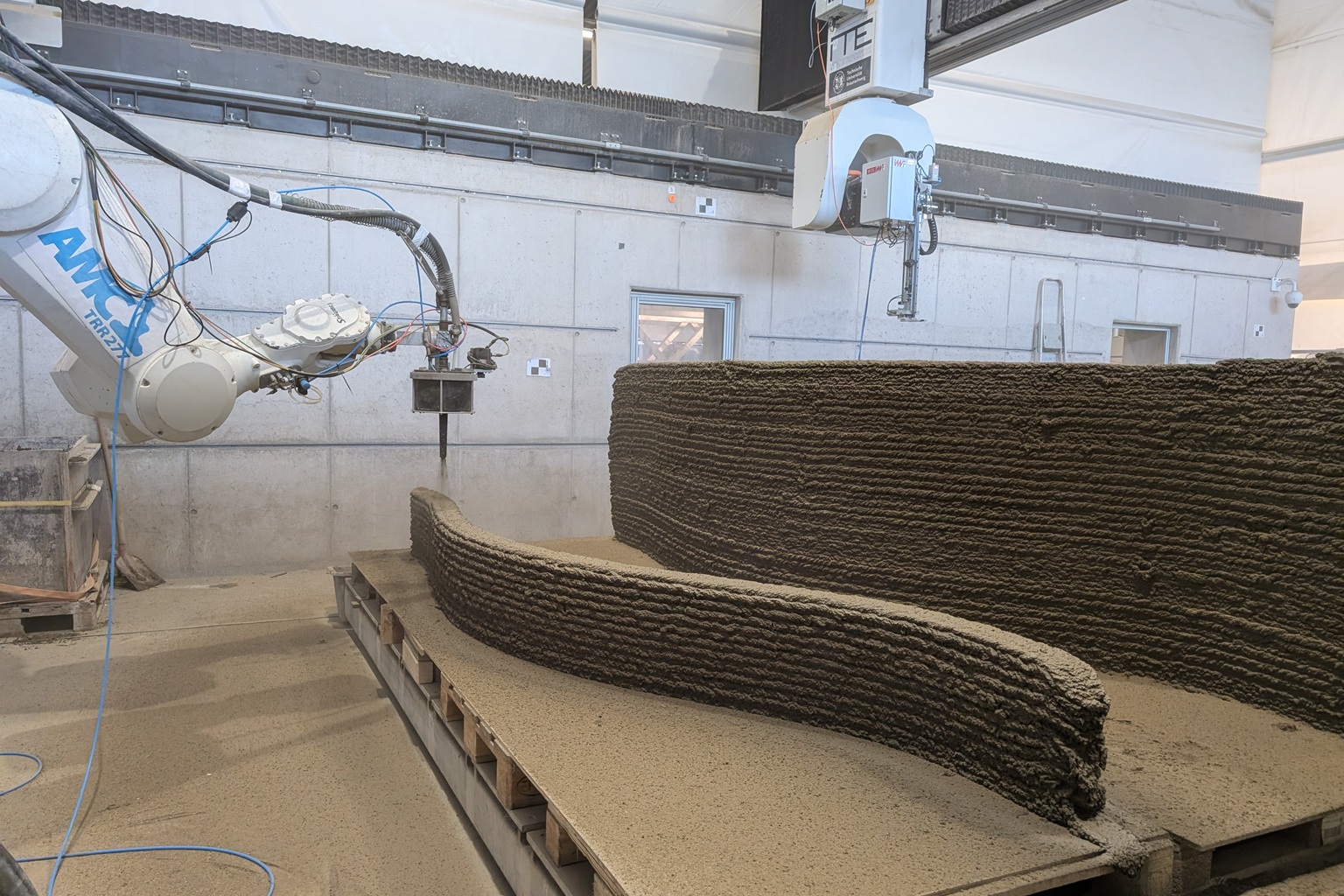
The shotcrete 3D printing process places particularly high demands on the plant engineering. Short response times, consistent material quality and seamless coordination between mixing, conveying and printing are essential.
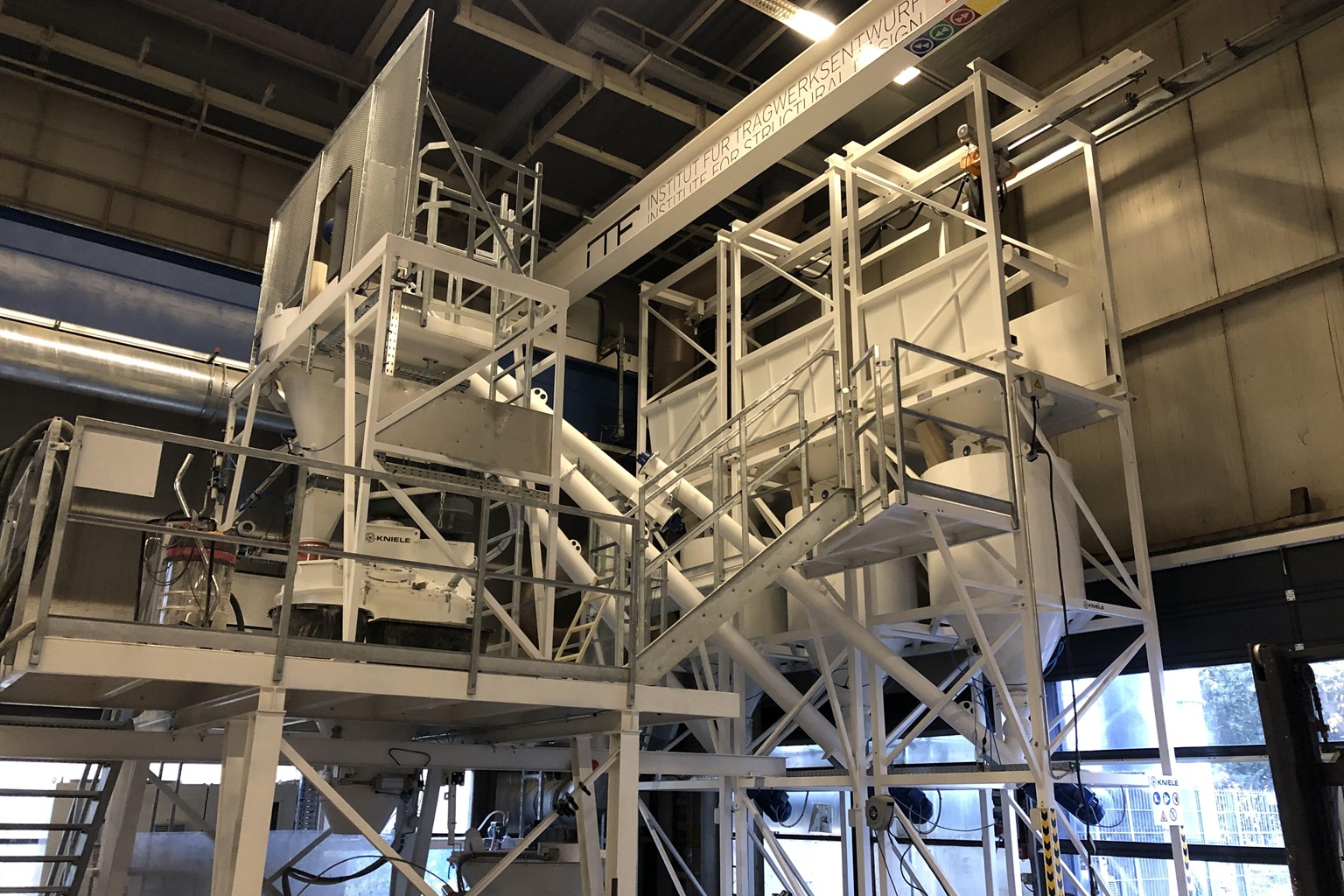
At the DBFL at TU Braunschweig, there was an additional challenge: very limited space, an existing pit and a reduced headroom due to the overhead crane. A detailed 3D scan of the existing structure formed the basis for the precise planning of the plant.
The plant concept: compact, flexible and digitally controllable
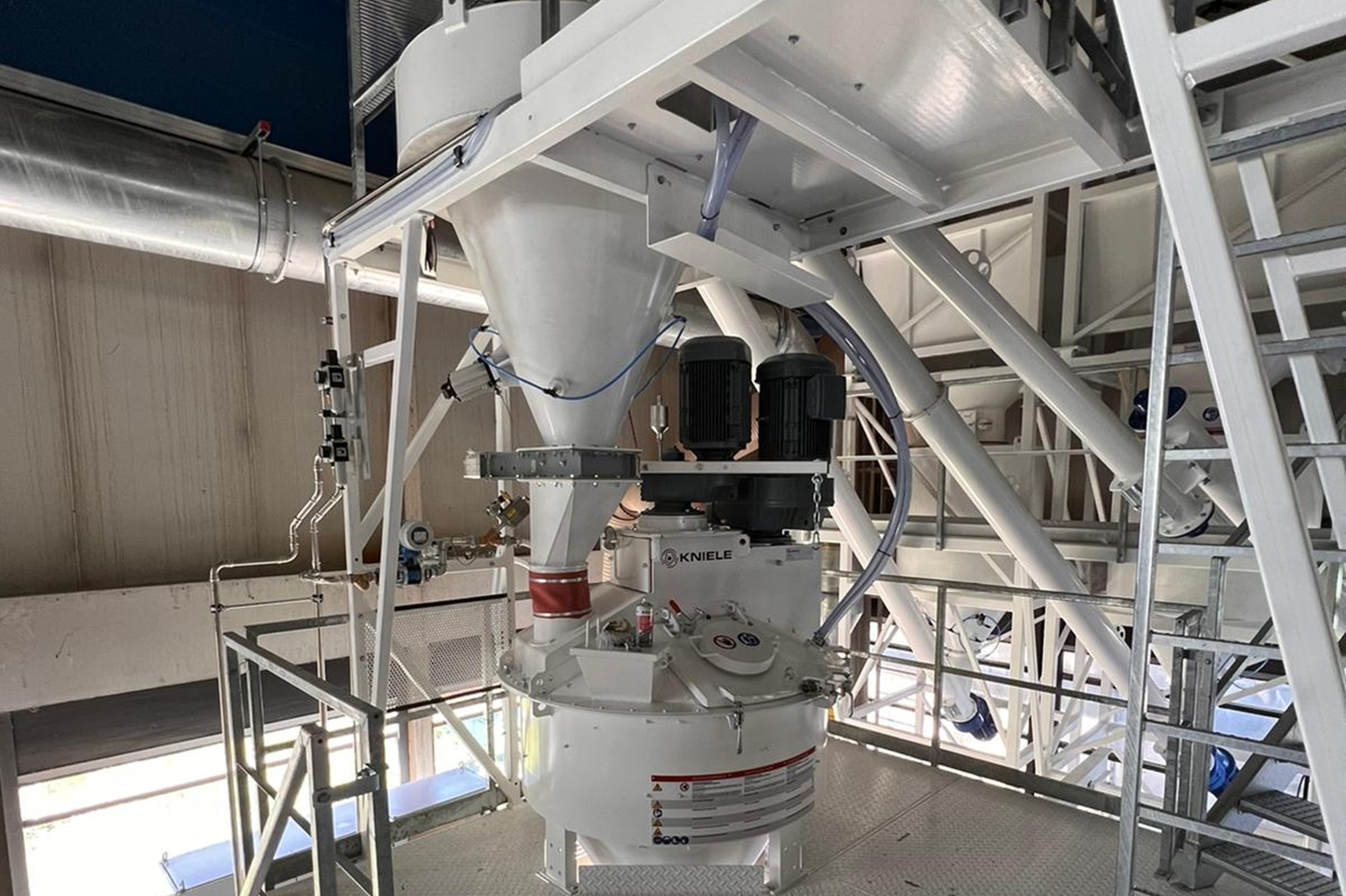
Despite the limited space, a compact and maintenance-friendly mixing plant was successfully implemented. At the heart of the plant is a Kniele KKM 375/550 cone mixer, which is specifically designed for the shotcrete 3D printing process.
Key components of the plant:
- 3-bay big bag station with separate buffer silos
- Space-saving filling via a shared electric chain hoist
- Precise dosing of raw materials via screw conveyors and cement scale
- Water dosing with coarse and fine dosing
- Additive scale (Würschum), fully integrated
- Forced dust extraction from the mixer for clean operating conditions
- Digital plant control and power unit from Bikotronic
The digital control system enables dynamic adjustment of the concrete mix design – a crucial factor for reproducible results in 3D concrete printing.
Seamless integration into the printing process
Located beneath the mixer is a storage silo, which acts as a buffer to ensure a continuous pumping and printing process. The modified concrete pump, fitted with a hopper and agitator, ensures a uniform, continuous flow of material to the robot and print head.
Deviations in consistency or flow behaviour can be detected immediately and compensated for via the control system – a significant contribution to process reliability.
Successful collaboration between research and industry
The project was implemented in close cooperation between Kniele GmbH and the project partners at TU Braunschweig, including Dr. Jeldrik Mainka, Prof. Harald Kloft and Prof. Dirk Lowke. The continuous technical exchange was crucial to the project’s success.
Conclusion: Mixing technology as the key to 3D concrete printing
With the mixing plant installed at the DBFL, Kniele demonstrates how bespoke mixing technology, digital control and compact design reliably enable 3D concrete printing using shotcrete.
The project underscores Kniele GmbH’s role as an innovation partner for demanding mixing processes and as a key driver of digital construction.